How to Play Chess for Beginners: Rules and Moves
Updated
Chess is a game for two players on an 8×8 board, and each side starts with 16 pieces: a king, a queen, two rooks, two bishops, two knights and eight pawns. White moves first, the players take turns, and each kind of piece moves in its own way. You win by checkmate: attacking the opponent's king so that it has no way to escape.
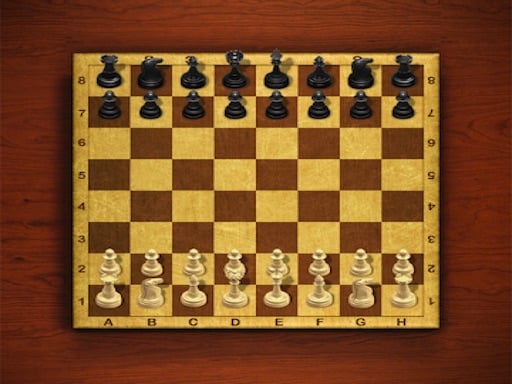
How to set up the chessboard
- Turn the board so that each player has a light square in the near-right corner. A common reminder is "white on right".
- Put the rooks in the corners, the knights next to them and the bishops next to the knights.
- Put the queen on the remaining square of her own color: the white queen on a light square, the black queen on a dark square.
- The king takes the last empty square, next to the queen.
- Fill the row in front of them with eight pawns.
When the board is set up correctly, the two queens face each other across the board, and so do the two kings.
How each piece moves
The rows of the board are called ranks and the columns are called files. To capture, you move a piece onto a square held by an enemy piece, and the enemy piece leaves the board.
| Piece | How it moves | Good to know |
|---|---|---|
| King | One square in any direction | It may never move onto a square that an enemy piece attacks |
| Queen | Any number of squares along a rank, a file or a diagonal | The strongest piece on the board |
| Rook | Any number of squares along a rank or a file | Takes part in castling with the king |
| Bishop | Any number of squares along a diagonal | Stays on squares of one color all game |
| Knight | Two squares in one direction, then one square to the side, in an L shape | The only piece that jumps over other pieces |
| Pawn | One square straight ahead, or two from its starting square if both are empty | Captures one square diagonally forward and never moves backward |
Queens, rooks and bishops cannot pass through other pieces. Pawns are the only pieces that capture differently from the way they move.
Check, checkmate and stalemate
Your king is in check when an enemy piece attacks it. You must answer at once: move the king, block the attack or capture the attacking piece. You may never make a move that leaves your own king in check.
Checkmate is a check that nothing can stop. The game ends there, and the player who gave checkmate wins.
Stalemate is different: the player to move is not in check but has no legal move. A stalemate is a draw, not a win.
A game can also be drawn when both players agree, when the same position appears three times, or when each player has made 50 moves without a capture or a pawn move. In the FIDE Laws of Chess, the last two are draws that a player claims.
The three special moves
Castling
Castling moves your king and a rook in the same turn. The king steps two squares toward the rook, and the rook jumps over to the square the king just crossed. You may castle only when all of these are true:
- Neither the king nor that rook has moved yet in the game.
- No pieces stand between them.
- Your king is not in check.
- The king does not pass through or land on a square that an enemy piece attacks.
En passant
If a pawn moves two squares from its starting square and lands right beside an enemy pawn, that enemy pawn may capture it as if it had moved only one square. Say your pawn stands on e5 and your opponent moves a pawn from d7 to d5: you may capture it by moving your pawn to d6. You must do it on the very next move, or the chance is gone.
Promotion
When a pawn reaches the far rank, it must be exchanged in the same move for a queen, rook, bishop or knight of its own color. A queen is the usual choice, so a player can have two or more queens at once.
First habits for beginners
- After every move your opponent makes, ask what it threatens.
- Bring out your knights and bishops early. Getting pieces into play fast is one of the main aims of the opening.
- Fight for the center with pawns and pieces. From the center, a piece reaches the rest of the board quickly.
- Keep your queen back at the start. Smaller pieces can chase her around and gain time.
- Castle early to move your king away from the middle of the board.
- Count before you capture, using the usual rough values: pawn 1, knight 3, bishop 3, rook 5, queen 9.
Habits 2 to 5 follow the common aims of the opening: develop your pieces, control the center and keep your king safe. They will not win every game, but they help you avoid quick losses.
Practice chess in your browser
Ultimate Chess shows green squares where a piece can move and red squares where it can capture. You can play a friend on the same device or the computer on Easy, Medium or Hard, and the game handles check, checkmate, castling and pawn promotion.
AIchessgame highlights legal moves, lets you play as White or Black, and has a Take back button to undo your last move. An evaluation bar shows who is winning. Master Chess offers the computer at three difficulty levels or a local game against a friend.
For practice with a goal, Chess Mania is a tower of 400 levels, and you complete each one by checkmating your opponent under standard rules.


More two-player board games are in the 2-player category and the strategy collection. Checkers is played on the same 8×8 board, as how to play checkers explains, and tic tac toe strategy shows forks and blocks on a board of nine squares.
Common questions about chess
Can you castle out of check?
No. You cannot castle while your king is in check. You can castle later, once the check is over, as long as the king and that rook have never moved.
Can a pawn move backwards?
No. Pawns only move forward, and they capture one square diagonally forward.
Who moves first in chess?
White always moves first. After that, the players take turns, one move each.
What happens if a player has no legal moves?
If that player's king is in check, it is checkmate and the game is lost. If the king is not in check, it is stalemate and the game is a draw.
Every chess game, from a first try at home to a world championship final, is played with these same rules.