How to Play Ludo: Rules, Safe Squares and Tips
Updated
Ludo is a race game for two to four players: each player moves four tokens from a corner yard, once around the board and up their own home column to the center. You roll one die, you need a six to bring a token out, and a six also gives you another roll. Land on an opponent's token and it goes back to its yard; the first player with all four tokens home wins.
The board and what you need
You need the board, one die and four tokens per player. Each player rolls once at the start, the highest roll goes first, and play passes clockwise.
| Part | What it is |
|---|---|
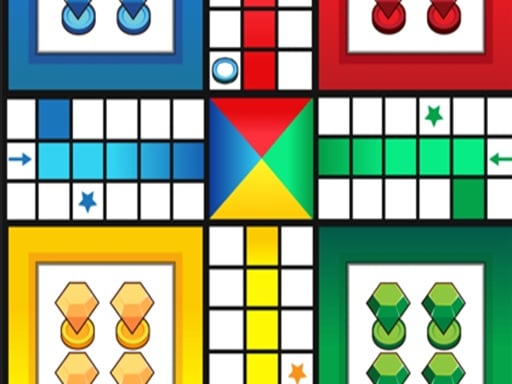
| Yard | The large corner area in your color, where your four tokens wait at the start |
| Starting square | The colored square on the track where your tokens enter play |
| Track | The path around the cross-shaped board that all players share |
| Home column | The colored squares, usually five, that lead from the track to the center; only you may enter yours |
| Home | The triangle in the center where your tokens finish |
How to play ludo, step by step
- On your turn, roll the die.
- To bring a token out of your yard onto your starting square, you need a six. If none of your tokens are in play and you roll anything else, your turn ends.
- Move one of your tokens forward, clockwise, by the number you rolled. You must use the roll if any token can move.
- A six earns a bonus roll. If you roll three sixes in a row, the third one is not played and your turn passes.
- If your token lands exactly on an opponent's token, that token goes back to its yard. Its owner needs another six to bring it out again.
- After one lap, turn into your home column. Opponents can never enter it, so tokens there are safe.
- You need the exact number to reach home. In most versions, a roll that would carry a token past home cannot be used for that token.
- The first player to bring all four tokens home wins.
Safe squares and blocks
A safe square is one where a token cannot be captured. Which squares count depends on the board you play on:
- Your home column is always safe, because no opponent can enter it.
- On boards from the Indian subcontinent, each quarter of the track has one safe square, usually marked with a star.
- Some versions also treat the colored starting squares as safe.
When two of your tokens stand on the same square, they form a block. In the classic rules, an opponent's token that lands on your block is sent back to its own yard instead of capturing. Some versions also stop opponents from passing a block, and some let a block be passed with a six or a one.
Browser games settle these details for you. The instructions of Ludo Legend say that tokens come out on a six, that opponents can kick your token back, and that the first player to get every token into the safehouse wins. Ludo Wars adds trap spaces to the track.
Common house rules
Ludo has been played at home for well over a century, and families and countries have developed their own rules. Here are the ones you may meet.
| Rule | Classic version | Common alternatives |
|---|---|---|
| Bringing a token out | Only on a six | On a one or a six; any roll for the first token; three tries to roll a six |
| Bonus rolls | For every six; a third six in a row ends the turn | Also for capturing a token or for bringing one home |
| Blocks | A token that lands on a block is sent back | Blocks can be passed with a six or a one; a single token can never take a block |
| Dice | One die | Two dice |
Agree on the house rules before the first roll, so nobody has to argue about them halfway through a game.
Ludo in India and Pakistan
Ludo is a simpler form of pachisi, an old Indian race game, and it was sold under the name Ludo in England in 1896. The game is still played in homes across India, and the version played on the subcontinent has a few differences of its own:
- Star squares: one safe square in each quarter of the track, as described above.
- In India the game is often played with two dice, and a one can also bring a token out. With a one and a six, you can bring a token out and move it six squares.
- In Pakistan, a two-dice version allows backward moves. You can use each die on a different token, or both on one token, moving forwards or backwards.
These details come from the history and variants of ludo. If you grew up with them, read a browser game's instructions before your first match, since each game uses its own fixed rules.
Tips that win more games
- Bring a second token out early. With two or more tokens on the board, every roll gives you a choice.
- Do not stop just in front of an opponent. Any token one to six squares behind yours can capture it with a single roll.
- Use safe squares as stepping stones on long stretches of the track.
- Take captures when they are cheap. Sending a token back costs its owner a new six and every square that token had already moved.
- Plan the finish. You need an exact roll to get home, so keep another token in play to use the numbers that do not fit.
Play ludo in your browser
Ludo Online and Ludo Wizard both have three modes: against the computer, online against randomly matched players, or privately with friends by sharing a code. Ludo Legend lets you play alone or pass one device around, and Ludo Maximus puts you against computer opponents.




For more games to share with friends, open the multiplayer category or the 2-player category. If your family also plays carrom, Carrom 2 Player is a strike-and-pocket game you aim with the mouse, and if dominoes come out after ludo, see how to play dominoes.
Common questions about ludo
Do you need a six to start in ludo?
In the classic rules, yes. In India a one often counts too, and some house rules let the first token out on any roll or give you three tries to roll a six.
What happens if you roll three sixes?
In the classic rules, the third six is not played and your turn passes to the next player.
Can you capture a token on a safe square?
No, that is what makes the square safe. Your home column is always safe, and on subcontinent boards the star squares are too.
How many players can play ludo?
Two, three or four, each with four tokens. Ludo Wars is built for two players, online or on one device.
Settle the house rules before the first roll, and the rest of ludo is counting squares and choosing which token to move.