Sudoku Rules and Tips for Beginners
Updated
Sudoku is a 9×9 grid divided into nine 3×3 boxes, with some digits already filled in. Your job is to fill every empty cell so that each row, each column and each box contains the digits 1 to 9 exactly once. There is no arithmetic: you solve it with logic, one cell at a time.
Sudoku rules
A sudoku has 81 cells, arranged in nine rows, nine columns and nine 3×3 boxes. The digits printed at the start are called givens, or clues.
- Each row must contain every digit from 1 to 9, once.
- Each column must contain every digit from 1 to 9, once.
- Each 3×3 box must contain every digit from 1 to 9, once.
- The givens stay as they are.
A properly made sudoku has exactly one solution. According to Wikipedia's sudoku article, the fewest givens such a puzzle can have is 17.
The digits are only symbols. Nothing is added or multiplied, so the puzzle would work the same with letters or pictures.
Words used in this guide
| Term | Meaning |
|---|---|
| Cell | One of the 81 squares |
| Unit | A row, a column or a box; each unit holds 1 to 9 once |
| Given | A digit printed in the puzzle at the start |
| Candidate | A digit that could still go in an empty cell |
| Pencil marks | Small candidate digits noted in a cell, also called notes |
Step 1: Scan the boxes
Start every solve by scanning. It finds digits without writing anything down.
- Pick a digit that appears often among the givens, for example 5.
- Choose a box that has no 5 yet.
- Look along the rows and columns that cross that box. A 5 in a crossing row rules out the three cells of that row inside the box, and a 5 in a crossing column does the same.
- If only one empty cell in the box is left, the 5 goes there.
- Repeat for the other boxes, then move on to the next digit.
When the boxes give nothing more, check the rows and columns the same way. A digit that has only one possible place in a row, column or box is called a hidden single, and scanning is how you spot it.
Step 2: Write pencil marks
When scanning stops giving you digits, write the candidates. For each empty cell, note every digit that does not already appear in its row, its column or its box.
If your game has a notes mode, use it. In Sudoku Puzzle Master, it is called Pencil Notes mode.
Keep the marks current. Each time you place a digit, erase it from the candidates of every cell in the same row, column and box. Stale pencil marks lead straight to wrong placements.
Step 3: Place naked singles
A naked single is a cell with only one candidate left, so that digit must go there.
Say a cell's row already holds 1, 2, 4 and 9, its column holds 3, 5 and 6, and its box holds 7. The only digit left for that cell is 8.
Step 4: Find hidden singles in your notes
A hidden single can hide among the pencil marks. If the 6 appears in the notes of only one cell in a row, that cell is the 6, even if it shows other candidates too.
Check each unit for a digit that appears only once in its notes. When a grid feels stuck, this check often finds the next digit.
Step 5: Use naked pairs
A naked pair is two cells in the same unit that hold exactly the same two candidates and nothing else, for example 3 and 7. Between them, those two cells must take the 3 and the 7.
So you can erase 3 and 7 from every other cell in that unit. If the pair shares a row and a box, clear both. SudokuWiki's page on naked candidates explains the rule with worked grids.
Here is how it pays off. Two cells in a row show only 3 and 7, and a third cell in the same row shows 3, 7 and 8. Erase the 3 and the 7 from the third cell, and it becomes a naked single: 8.
Beginner mistakes
- Guessing. A wrong guess can spoil much of the grid before you notice it.
- Skipping the boxes. Start each pass with the boxes, then check the rows and columns.
- Forgetting to update notes. Every placed digit removes candidates from three units.
- Taking a hint at the first stall. Do one more full scan first; finding the digit yourself teaches you more.
- Starting too hard. Move up a level only when you can finish the current one without hints.
Free sudoku games to practice on
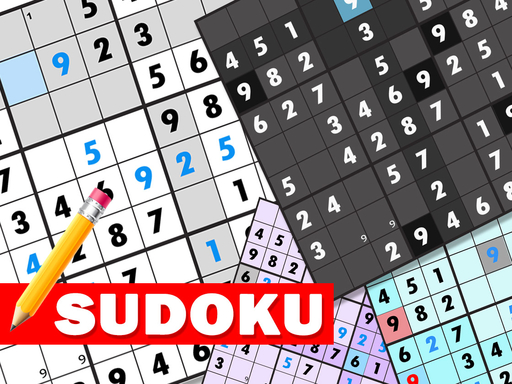
- Sudoku lets you choose Easy, Hard, Very Hard or Insane.
- Sudoku Puzzle Master has several difficulty levels, Pencil Notes mode, an erase button and a hint button.
- Sudoku for bro has several difficulty levels, hints, a check for mistakes and an option to show the solution.
- Sudoku Puzzle plays the classic 81-cell grid, and Sudoku Master is another classic sudoku.


If you like sudoku
These logic puzzles use the same kind of thinking with different rules.
- Meow Sudoku: place cats so that no row, column or color has more than one cat, and no two cats touch.
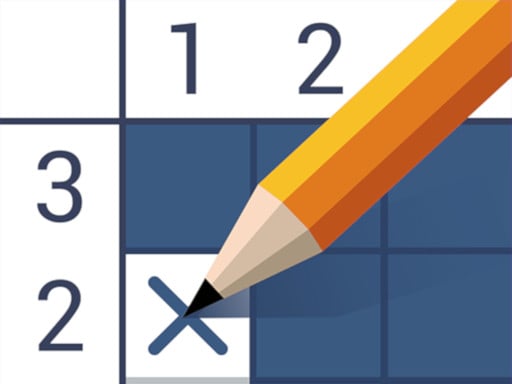
- Nonogram - Picture Cross: number clues along the rows and columns tell you which squares to fill, and the filled squares reveal a pixel picture.
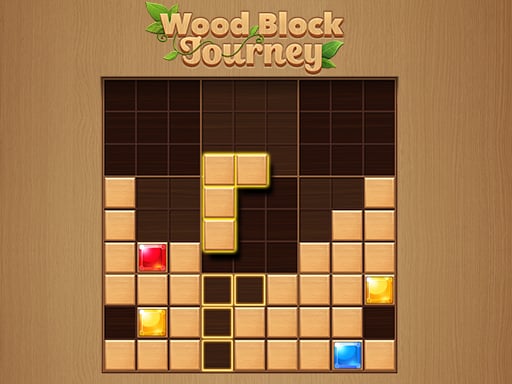
- Wood Block Journey: place wooden blocks on a 9×9 board and fill rows, columns or squares to clear them. The guide to block puzzle tips covers that kind of game.
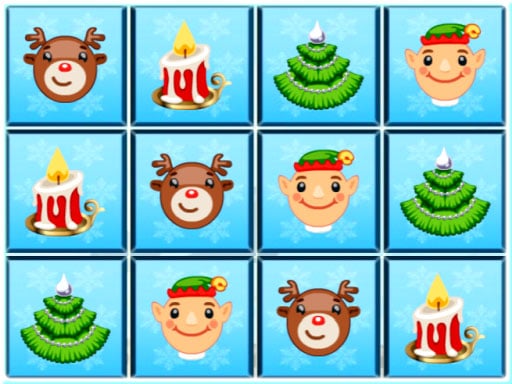
- Xmas Sudoku Deluxe: a simplified sudoku with items instead of digits, where no item may repeat in a row or column.

More logic games are in brain games and puzzles.
FAQ
Is sudoku math?
Not in the sense of arithmetic. You never add or multiply anything, and the digits are just nine different symbols; you solve it with logic.
How many numbers does a sudoku start with?
It varies from puzzle to puzzle. A sudoku with a single solution needs at least 17 givens.
What are the small numbers in a sudoku?
They are pencil marks, or candidates: the digits that could still go in that cell. They are notes, not part of the answer.
Can a sudoku have more than one solution?
A properly made sudoku has exactly one. If two digits both seem to fit a cell, the logic that decides between them is somewhere else in the grid, so work on another area and come back.
Scan first, mark candidates second, and keep the marks up to date; those three habits carry you a long way.